JournalSpecies guide
Ibex at the Creux du Van: a photographer’s guide
How to photograph the ibex of the Creux du Van in the Neuchâtel Jura: getting there, the best light and seasons, lenses, and the rules of the reserve.
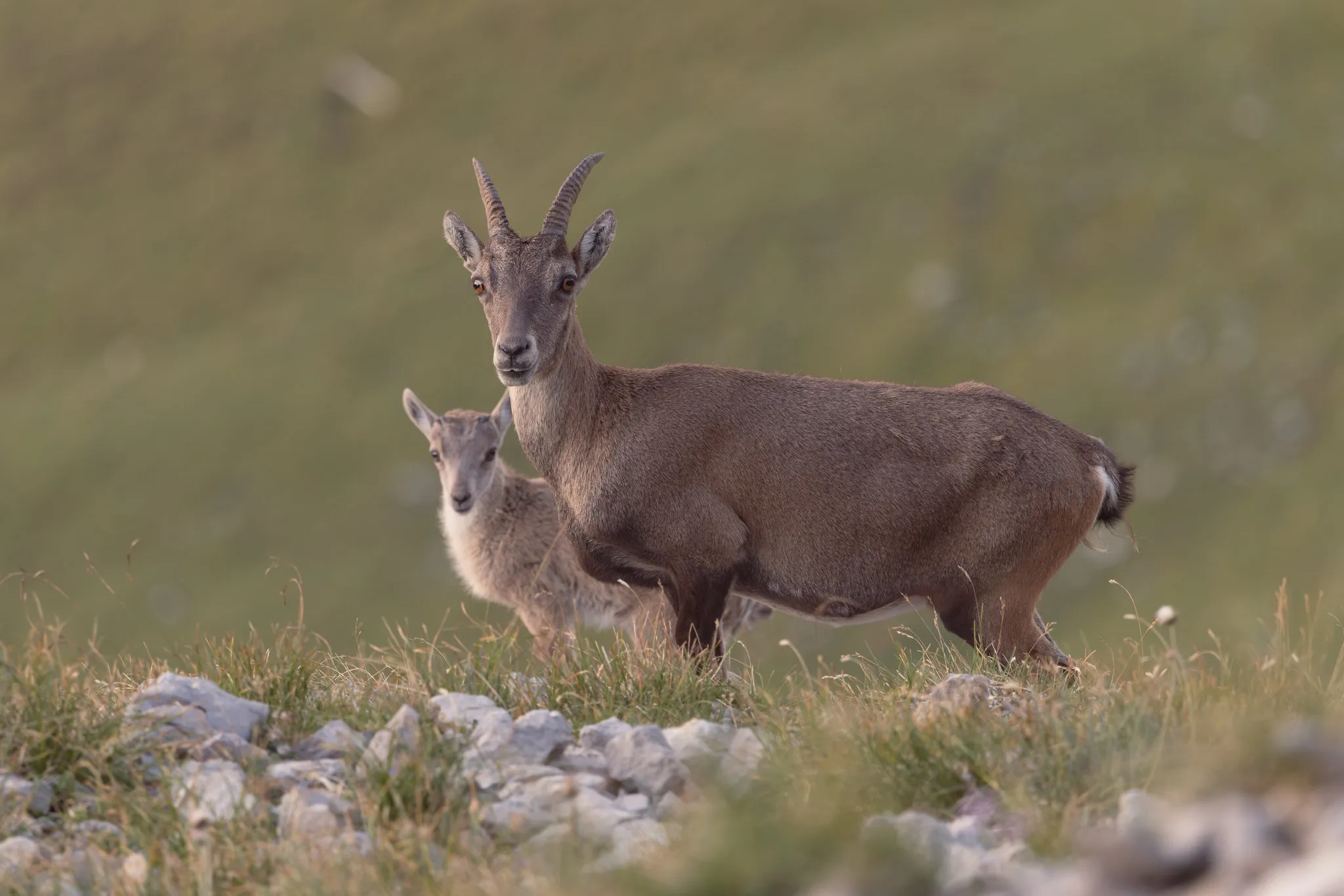
Most ibex photography in Switzerland happens high in the Alps, and for us usually on Pilatus. The Creux du Van is the exception. It sits in the Jura, on the border between the cantons of Neuchâtel and Vaud, at a little over 1,400 metres, and it has its own small colony of ibex living along the edge of one of the most dramatic cliffs in the country.
For photographers that means approachable animals, a spectacular setting, and a location you can reach in a morning from most of western Switzerland.
The place
The Creux du Van is a natural rock amphitheatre: a horseshoe of vertical limestone cliffs around 160 metres high and more than a kilometre across. A dry-stone wall runs along much of the rim, with open pasture behind it and a sheer drop in front.
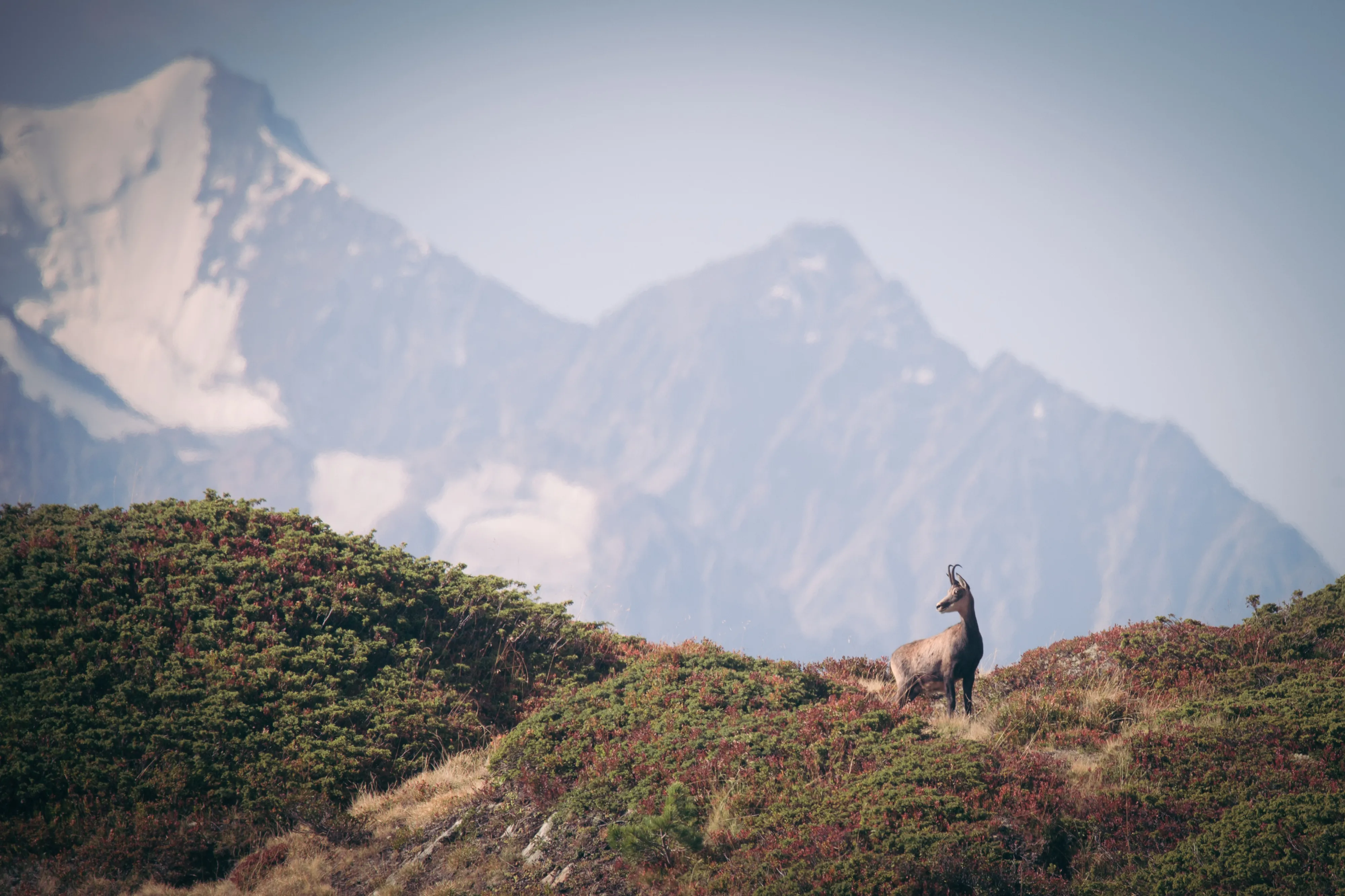
Ibex were released here in the 1960s and have lived on the cliffs and the meadows above them ever since. Chamois use the same ground, so it is worth knowing how to tell the two apart.
The colony is small. On some days the animals are grazing a few metres from the path; on others they are down on the ledges and out of sight. Patience and a second visit are part of the plan.
Getting there
There are two usual approaches.
- On foot from Noiraigue. The classic route climbs the Sentier des Quatorze Contours, a path of fourteen hairpin bends through the forest. Allow about two hours up, with roughly 700 metres of ascent.
- By road to the Ferme du Soliat. A narrow road leads to a farm restaurant just behind the rim, from where the edge is a short, easy walk. The road is not kept open in winter.
For sunrise you need to be on the rim in the dark, so plan accordingly and bring a head torch.
When to go
- Late spring. Kids are born in early summer and spend their first weeks close to the cliffs. Fresh grass, flowers and animals in their summer coats.
- Autumn. The best season for atmosphere. Cold nights often fill the basin with fog, and the rim stands above a sea of cloud at sunrise.
- Winter. Snow on the plateau, thick winter coats and very few people. Access is on foot or snowshoes, and the wind on the rim is severe.
- Summer. Long days and reliable access, but it is the busiest season. Go early or late and avoid weekends.
Whatever the month, the first and last hour of light are when the ibex are most active near the rim, and when the place is quietest.
Lenses and settings
The ibex here suit a mid-range zoom far more than an extreme telephoto.
| Situation | Lens | Starting settings |
|---|---|---|
| Portraits | 70–200mm or 100–400mm | f/4 to f/5.6, 1/500 s |
| Animal in the landscape | 24–70mm | f/8, 1/250 s |
| Rim-lit, low-key portraits | 200–400mm | Expose for the highlights, −1 to −2 EV |
| The amphitheatre itself | 14–24mm | f/8 to f/11, tripod |
Because the animals stay put, this is a place to slow down. Work one animal properly. Change your height, shoot through foreground grass, wait for it to step onto the skyline.
Ideas beyond the standard portrait
- Backlight on the horns. Position yourself so that a low sun is behind the animal and a shaded cliff is behind that. Underexpose and the horns glow against black.
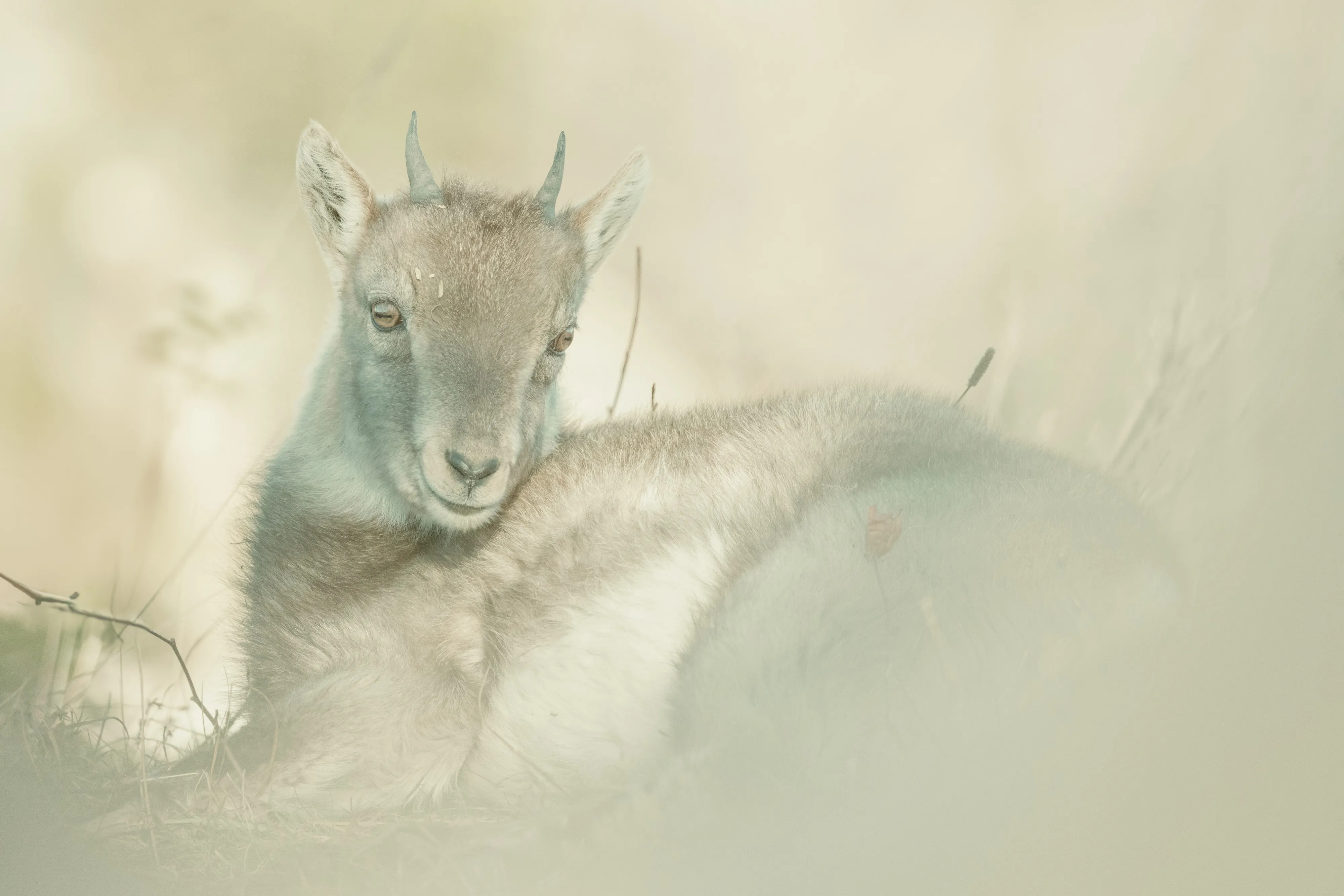
- High-key in haze. On a bright, misty morning, overexpose slightly and let the background wash out to white.
- Scale. Step back and put a small ibex on the rim with the whole cliff curving away beneath it.
Rules of the reserve
The Creux du Van is a protected area and gets a great many visitors. The rules exist so that it stays worth visiting.
- Stay on the marked paths and behind the wall. The edge is unfenced.
- Dogs must be on a lead.
- No camping or fires.
- Do not approach or follow the animals. Let them come to you, and never stand between an animal and the cliff or between a mother and her kid.
An ibex that keeps grazing while you photograph it is the goal. One that lifts its head and walks away has told you that you were too close.
With a guide
You can visit the Creux du Van on your own, and you should. A guided day adds the things that are hard to work out alone: where the animals have been that week, where to stand for the light, and how to turn a tolerant subject into a set of pictures that do not all look the same.