JournalSpecies guide
Chamois or ibex? How to tell them apart, and where to photograph each
The two wild mountain goats of the Swiss Alps are easy to confuse at a distance. Horns, face, size and behaviour: a quick field guide for photographers.
Switzerland has two wild mountain ungulates that every visitor hopes to see: the chamois and the Alpine ibex. At two hundred metres on a grey scree slope they look much alike. Close up they could hardly be more different, in looks or in temperament, and that difference shapes how you photograph each one.
The quick answer
Look at the horns and the face.
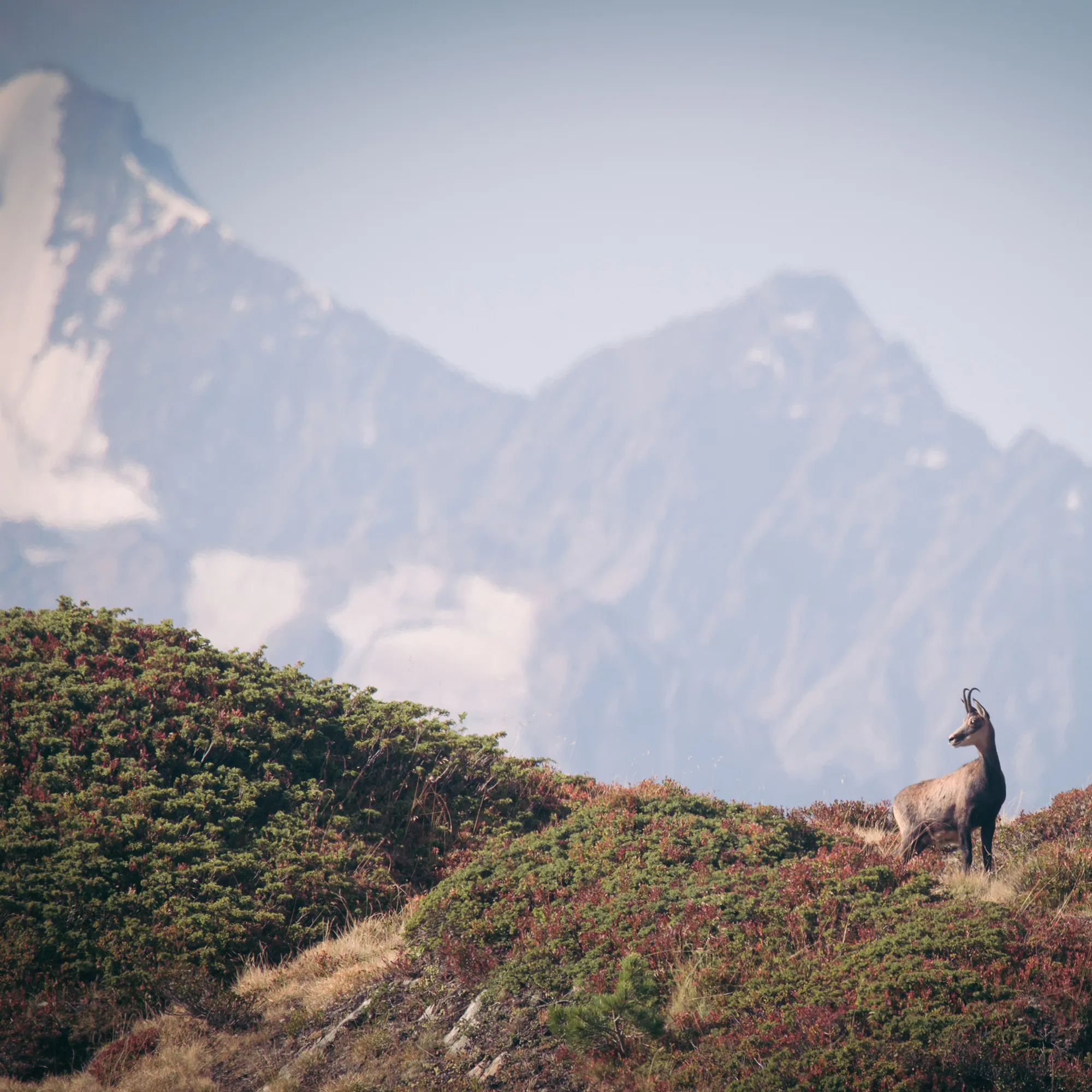
- Chamois: short, thin, black horns that hook backwards at the tip, and a pale face with a dark stripe running from the eye to the muzzle.
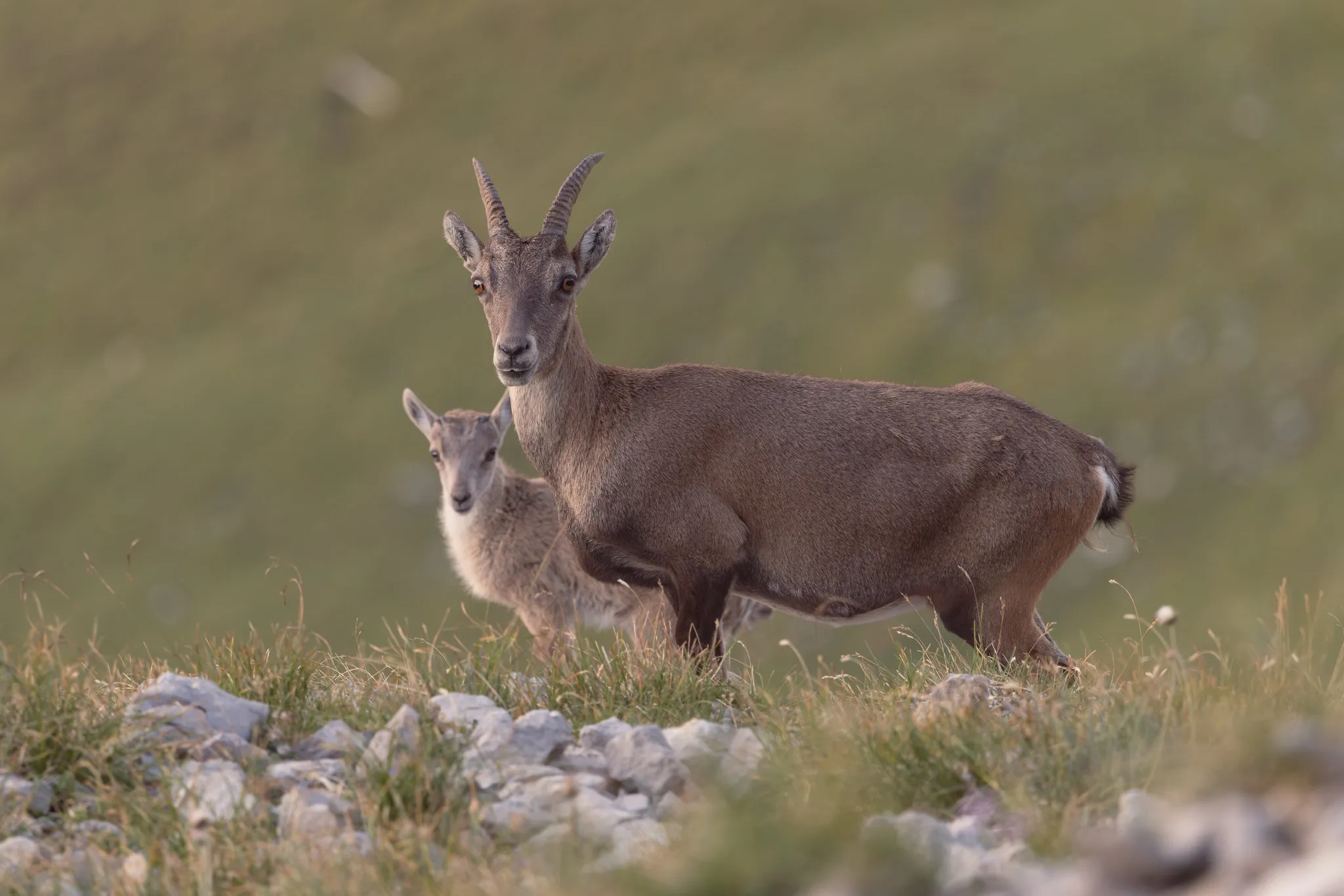
- Ibex: thick, ridged horns that sweep back in a long curve, and a plain grey-brown face with no mask.
If the horns are longer than the head, it is an ibex.
Side by side
| Chamois | Alpine ibex | |
|---|---|---|
| Latin name | Rupicapra rupicapra | Capra ibex |
| Build | Slim, long-legged, agile | Stocky and heavy |
| Weight | Roughly 25 to 50 kg | Females about 40 to 50 kg, males up to around 100 kg |
| Horns | Slim black hooks, about 25 cm, similar in both sexes | Heavy and ridged; up to around a metre on males, much shorter on females |
| Face | White with a dark eye stripe | Uniform grey-brown; males have a short beard |
| Coat | Tan in summer, almost black in winter | Grey-brown all year, thicker in winter |
| Habitat | From mountain forest to high pasture | Rocky slopes above the tree line |
| Temperament | Wary and quick to move off | Calm, often tolerant of people |
| Numbers in Switzerland | Roughly 90,000 | Around 18,000 |
Behaviour: the bigger difference
Ibex stay. In areas where they are used to walkers, ibex will often carry on feeding or resting while you settle in at a respectful distance. That gives you time to think about light, background and composition.
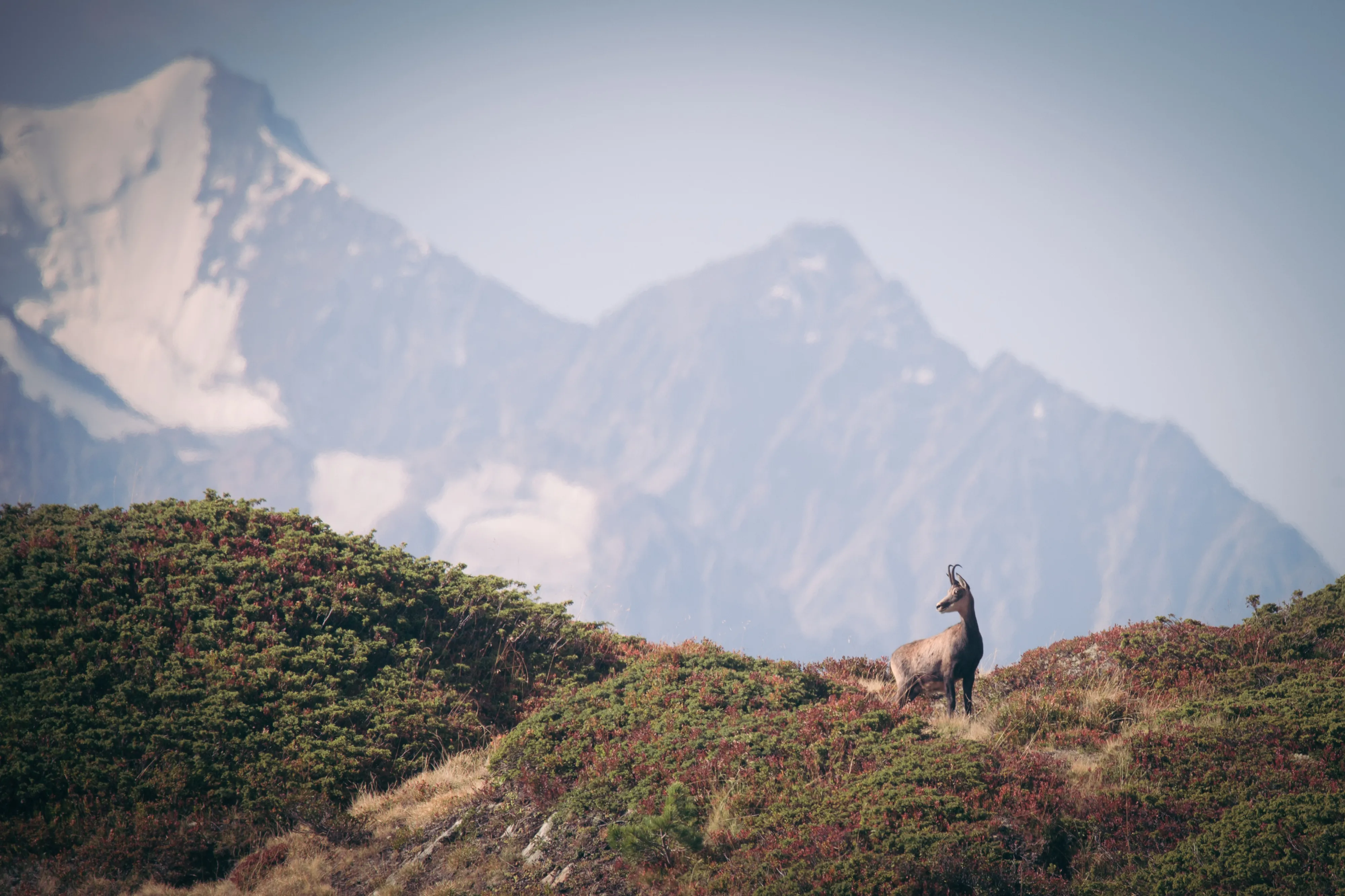
Chamois go. They notice you early and they do not wait to find out what you want. A chamois that has seen you will usually move off across the slope at a pace no person can follow. Good chamois pictures come from anticipating where an animal will cross and being there, still, before it arrives.
Different animals, different pictures
With ibex, think portraits. You can work on rim light, low-key exposures, soft foregrounds and tight frames of horns and eyes. A 70–200mm or 100–400mm lens covers most situations.
With chamois, think animal in landscape. Their habit of pausing on ridges and skylines gives you a small, sharp figure against layers of mountain. You will usually want 400mm or more, and a faster shutter speed for when they run.
When to see them
Both can be photographed all year.
- Spring: ibex come down to the first snow-free slopes to feed. Chamois are moulting and look scruffy.
- Early summer: kids of both species are born and stay close to steep ground.
- Autumn: chamois are in fine condition against autumn colour, and the rut builds through late autumn into early winter.
- Winter: chamois in their black coats against snow; ibex rutting in the coldest weeks.
Where we photograph them
Both species live on Pilatus, our home mountain above Lucerne: ibex on the limestone ridges near the summit, chamois on the slopes below. It is one of the few places where you can photograph the two on the same day. See the Pilatus tour.
On request we also photograph ibex in the Neuchâtel Jura, where the setting is extraordinary. See the ibex tour or the Creux du Van guide.
A note on distance
In winter both species are living off reserves. Every time one is made to run through deep snow it burns energy it cannot easily replace. Watch from where you are, let the animal choose the distance, and take the picture it offers.