Species guidesAlcedo atthis
Kingfisher photography in Switzerland
A kingfisher is smaller than most people expect, barely larger than a sparrow, and it is usually seen as a flash of blue low over the water with a thin, sharp whistle. Getting one to sit in front of a lens is about knowing its perches and being prepared to wait.
- Species
- Kingfisher Alcedo atthis
- Best season
- May and June; present all year
- Habitat
- Lowland rivers and lakes
- Lens
- 400mm or longer
Kingfishers live in Switzerland all year, on the rivers and lakes of the lowlands. They are scarce, with only a few hundred breeding pairs in the country, which is part of why a good frame is so satisfying.
The bird
Kingfishers need two things: clear, slow water with plenty of small fish, and a steep earth bank to tunnel a nest into. Where both exist, a pair will hold the same stretch year after year.
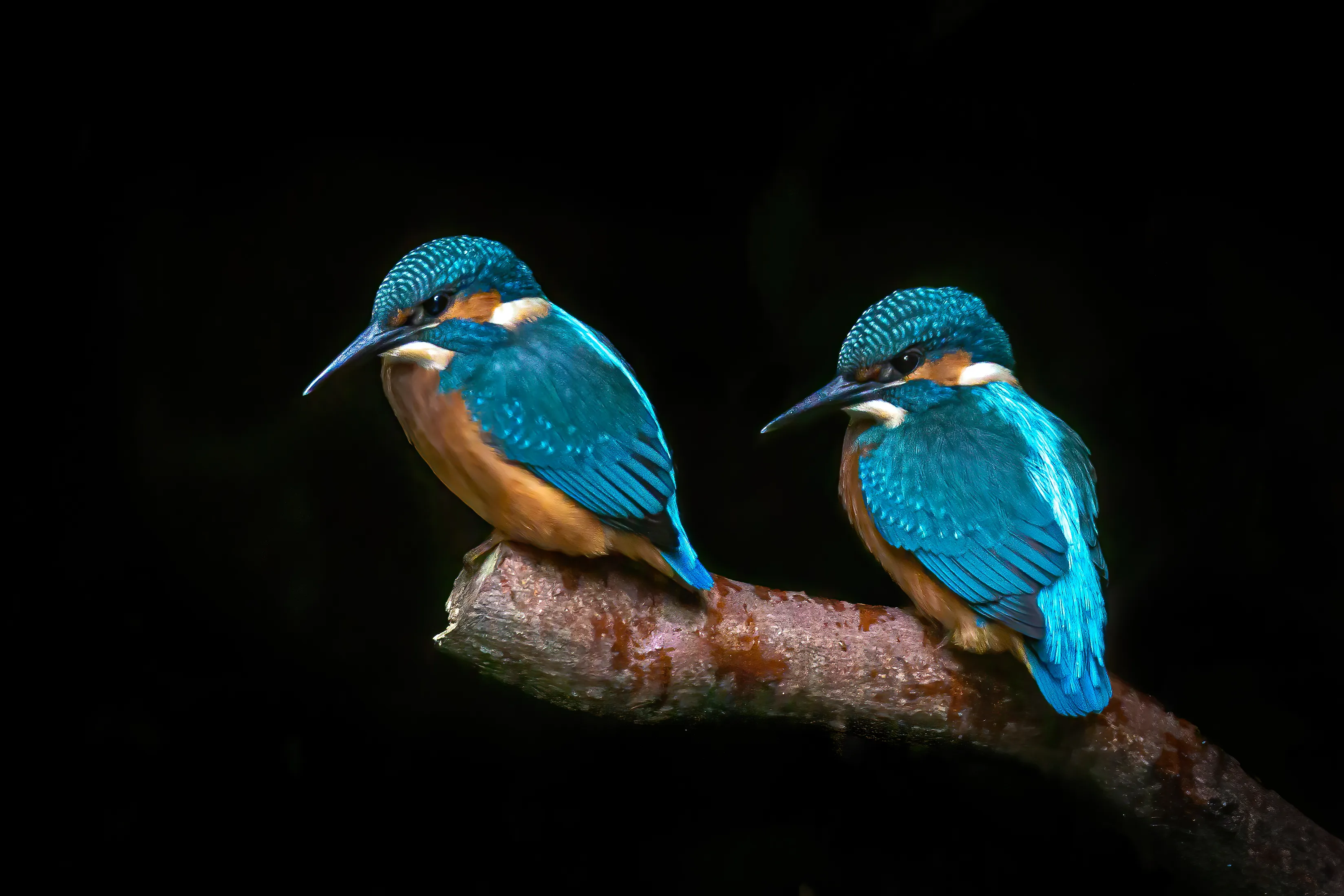
They hunt from a perch, watching the water, then dive and return to the same branch to stun and swallow the catch. Males and females look alike except for the bill: all black on the male, orange-red on the lower half for the female.
Hard winters are the main threat. When still water freezes, the birds cannot feed, and numbers can fall sharply before recovering over the following summers.
When to go
May and June are the busiest months. Adults are fishing constantly to feed young, and many pairs raise a second brood straight after the first, so activity carries on through the summer.
In autumn and winter the birds spread out to larger lakes, harbours and any water that stays ice-free. They are easier to find then, though less tied to a single perch.
How to photograph them
Everything depends on the perch. A kingfisher uses a small number of favourite branches, and the work is in finding one with good light and a clean background, then staying still, low and quiet, or using a hide.
Light under riverside trees is poor. For a perched bird, 1/500 s at f/4 to f/5.6 is enough, with the ISO wherever it needs to be. For the dive, pre-focus on the water below the perch and use 1/3200 s or faster.
A shaded bank behind a sunlit bird gives the near-black background that suits the colours so well. Expose for the bird and let the rest go dark.
Without disturbing them
Kingfishers are protected and sensitive at the nest. We never work near a nesting bank. A bird that sits holding a fish and will not fly in is telling you that you are between it and its young: move away at once.
We do not share nest locations, and we do not cut or move vegetation to improve a view.
Photograph kingfishers with a guide
Tell us when you would like to come and who is coming. We reply with what is realistic for those dates, a draft plan and exact pricing.