Species guidesMarmota marmota
Alpine marmot photography in Switzerland
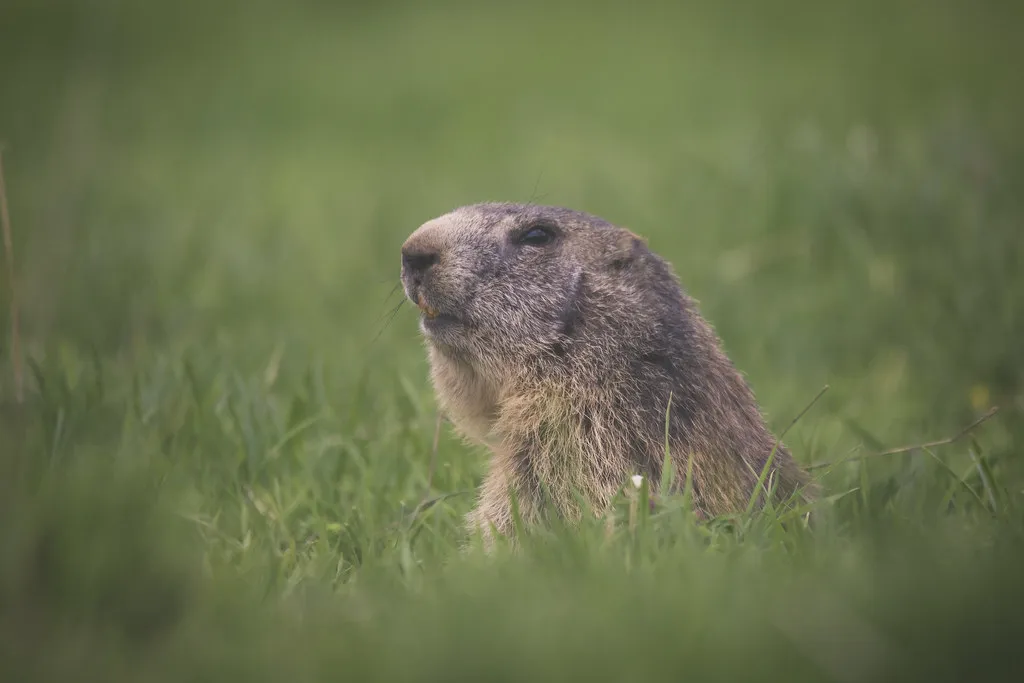
Marmots are the easiest wild mammal to photograph in the Alps, and one of the most rewarding. They live in family groups, they are active in daylight, and where people keep to the paths they become tolerant enough for real portraits.
- Species
- Alpine marmot Marmota marmota
- Best season
- May to September
- Habitat
- Alpine meadows above the tree line
- Lens
- 70–200mm to 400mm
The catch is the calendar. Marmots hibernate for more than half the year, so everything happens between spring and early autumn.
The animal
Alpine marmots are large ground squirrels that live in burrow systems in open meadows, mostly above the tree line. A family shares one territory and one winter burrow.
One animal is usually upright on a rock keeping watch. The piercing alarm whistle, which is in fact a call made in the throat, sends the whole group underground when an eagle or a fox appears.
They are found across the Swiss Alps, including Valais, Graubünden and the Bernese Oberland.
When to go
Marmots emerge in April or May, thin and hungry, while snow still lies around the burrows. May and June give you animals against the last snow and the first flowers.
The young first appear above ground around early July and are bold and playful. From August the families are busy feeding up and carrying dry grass underground for bedding. By October they are asleep.
How to photograph them
Get low. A marmot photographed from standing height looks like a snapshot; the same animal from ground level, with out-of-focus flowers in front and a peak behind, looks like a portrait.
Early morning and evening are best. In the middle of a hot day marmots retreat underground. A 70–200mm is often long enough for animals used to walkers, and a wide lens can work for a marmot in its landscape.
Watch for behaviour: young play-fighting on their hind legs, greeting by touching noses, a sentinel in silhouette on a rock.
Without disturbing them
We do not feed marmots. Human food harms them and changes their behaviour. We stay off the burrow entrances and let the animals come out in their own time.
If the whistle goes and the meadow empties, we wait where we are. They are usually back within a few minutes.
Photograph marmots with a guide
Tell us when you would like to come and who is coming. We reply with what is realistic for those dates, a draft plan and exact pricing.