Species guidesMerops apiaster
Bee-eater photography in Switzerland
Chestnut, gold, turquoise and a black mask: the European bee-eater looks as though it belongs somewhere much further south. For most of the year it does. The birds winter in Africa and spend only the warm months in Europe.
- Species
- Bee-eater Merops apiaster
- Best season
- May to August
- Habitat
- Warm lowlands, sandy banks
- Lens
- 400mm or longer
They began breeding regularly in Switzerland in the 1990s and have grown steadily in number since, helped by warmer summers. They are still local and still special, and they are in the country for barely four months.
The bird
Bee-eaters nest in colonies, digging tunnels a metre or more into sandy banks, often in working or disused gravel pits. They need warm, open country with plenty of large flying insects.
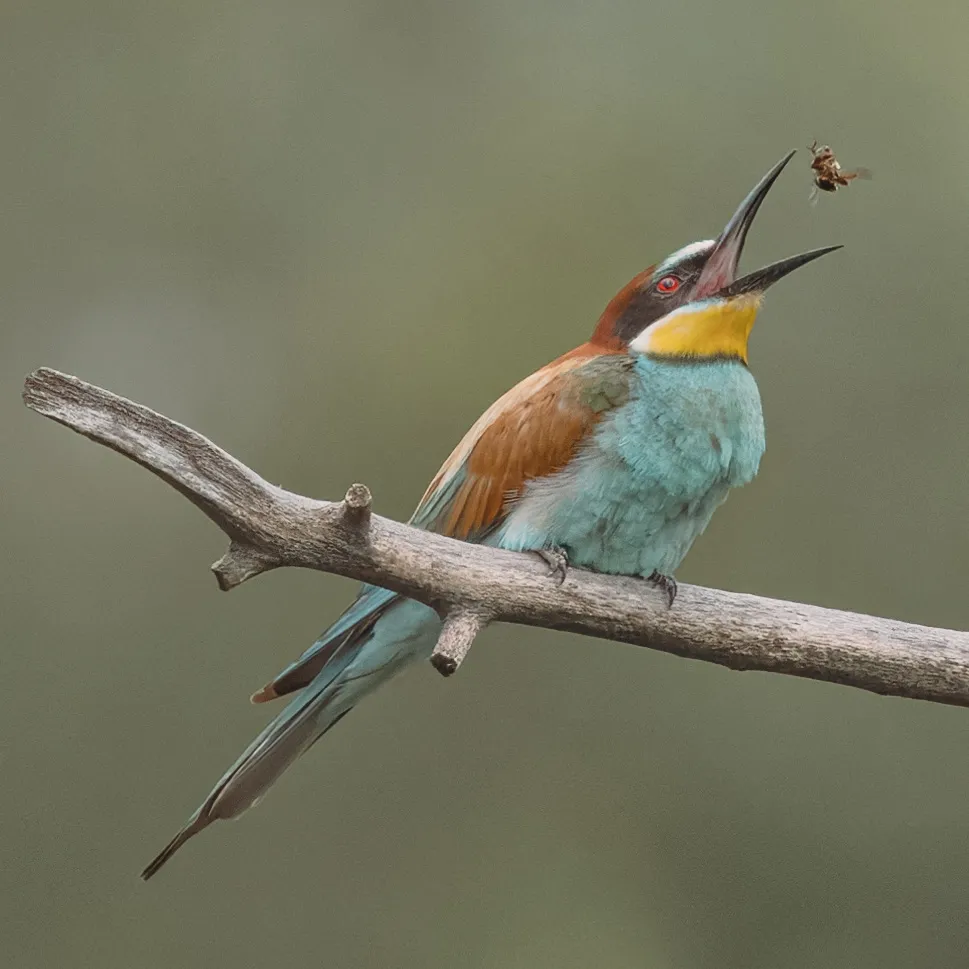
They hunt on the wing, taking bees, wasps, dragonflies and butterflies, then carry the catch back to a perch. A stinging insect is beaten and rubbed against the branch to remove the sting before it is swallowed, often after a toss into the air.
When to go
The birds arrive in May. The first weeks bring courtship, with males passing insects to females on the perch. Through June the adults are quieter while they incubate.
July and early August are the peak for activity: adults ferry food to the tunnels all day, and once the young fledge, whole families line up on the same branches. By early September they are gone.
How to photograph them
Bee-eaters return to the same exposed perches again and again, which makes them one of the more predictable small birds to work with. Choose a perch with a distant, even background and wait for the birds to come to it.
For perched birds, 1/1000 s freezes the insect toss. For flight, use 1/2500 s or faster: they are quick and change direction without warning. Summer light is harsh by mid-morning, so the first and last two hours of the day give the best colour.
Without disturbing them
A colony is easy to disturb and slow to recover. We keep well back from the nesting bank, never stand above or in front of the tunnels, and photograph on perches the birds choose themselves.
Many colonies are on private or protected land. We work only where access is permitted.
Photograph bee-eaters with a guide
Tell us when you would like to come and who is coming. We reply with what is realistic for those dates, a draft plan and exact pricing.